
NEWS
5 MIN AGO: Canada COUNTERS Trump’s Tariffs With a $2.3 BILLION Auto Strategy! 🚗💥🇨🇦🇺🇸 Canada has just fired back at Trump’s tariff pressure with a massive $2.3 billion auto strategy designed to shield its industry and outmaneuver Washington. Instead of reacting defensively, Ottawa moved to lock in production, protect jobs, and secure long-term investment — signaling it won’t let U.S. threats dictate its manufacturing future. Insiders say the plan instantly blunted the impact of tariffs and forced U.S. officials to confront a reality they didn’t expect: Canada is playing offense now. 👉 How the $2.3B strategy neutralizes Trump’s tariffs — and why Detroit is watching closely — is now dominating auto industry chatter. 👇👇 Click the full story before the ripple effects hit North America’s car market.

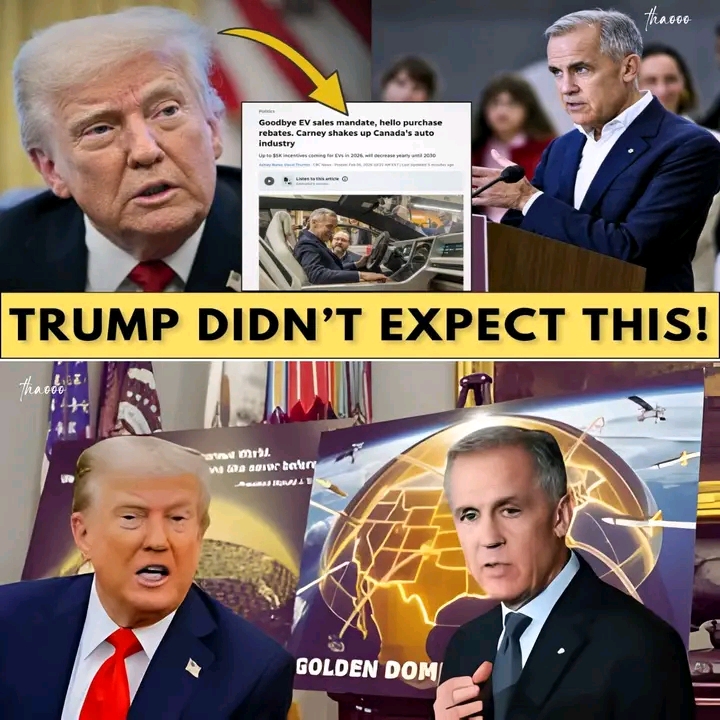
5 MIN AGO: Canada COUNTERS Trump’s Tariffs With a $2.3 BILLION Auto Strategy! 🚗💥🇨🇦🇺🇸
Canada has just fired back at Trump’s tariff pressure with a massive $2.3 billion auto strategy designed to shield its industry and outmaneuver Washington. Instead of reacting defensively, Ottawa moved to lock in production, protect jobs, and secure long-term investment — signaling it won’t let U.S. threats dictate its manufacturing future. Insiders say the plan instantly blunted the impact of tariffs and forced U.S. officials to confront a reality they didn’t expect: Canada is playing offense now.
👉 How the $2.3B strategy neutralizes Trump’s tariffs — and why Detroit is watching closely — is now dominating auto industry chatter.
👇👇 Click the full story before the ripple effects hit North America’s car market.
🚨 5 MIN AGO: Canada Hits Back at Trump’s Auto Tariffs With a $2.3 BILLION Game-Changing Strategy! 🚗💥🇨🇦🇺🇸
In a bold move that reframes the North American auto trade war, Canada has unveiled a sweeping $2.3 billion automotive strategy designed to counteract U.S. tariffs and protect its domestic manufacturing base — signaling that Ottawa is no longer taking a back seat while Washington escalates pressure.
🇨🇦 From Defense to Offense: Canada’s New Auto Strategy
Faced with 25 per cent U.S. tariffs on non-U.S. automotive content, Canadian Prime Minister Mark Carney and Industry Minister Mélanie Joly have introduced a coordinated plan aimed at rewarding local production, boosting domestic demand, and insulating jobs from the fallout of Washington’s policies.
Key elements of the strategy include:
👉 $2.3 billion in consumer rebates under a new Electric Vehicle (EV) Affordability Program — offering up to $5,000 off battery-electric vehicles and up to $2,500 for plug-in hybrids (with special incentives for Canadian-made EVs).
👉 Strengthened tariff and import credit framework that rewards automakers for producing in Canada and protects local manufacturing from unfair competition.
👉 Expanded EV charging infrastructure with $1.5 billion in public investment to accelerate electrification across the country.
👉 Support for workers and retraining programs for those affected by industry shifts and trade disruptions.
Instead of merely fighting tariffs, Ottawa is shaping policy to lock in production, spur investment, and diversify export markets — a far more proactive stance than many analysts anticipated.
🔥 Ottawa’s Strategy: How It Blunts Trump’s Tariff Pressure
Rather than simply matching Washington’s tariffs dollar-for-dollar or focusing on punitive measures, Canada’s approach mixes market incentives with industrial strategy:
Boosts domestic demand by making EVs more affordable for consumers and especially attractive when built in Canada.
Encourages global automakers to increase production here by tying benefits to local investment.
Maintains counter-tariffs to level the playing field while signalling that Canada won’t cave under pressure.
Diversifies trade relationships, including strategic partnerships with Korea and moves toward Chinese joint ventures — mitigating over-reliance on the U.S. market.
The strategy combines short-term relief with long-term industrial planning, putting Ottawa in a much stronger negotiating position.
📊 Why This Matters to North America’s Auto Market
Detroit, Ontario, and auto hubs across the continent are watching closely:
U.S. automakers face a new reality: Canada’s plan makes it more profitable to build and sell vehicles north of the border, even under tariff pressure, challenging U.S. attempts to push production southward.
Supply chains could shift, as companies weigh tariff costs against domestic incentives and broader trade access.
Consumers on both sides of the border stand to benefit from more competitive pricing and cleaner vehicle options as rebates and infrastructure investments take effect.
🧠 What Industry Insiders Are Saying
Analysts and insiders note that Canada’s strategy does more than soften the blow — it changes the game:
Canada’s new approach is offensive trade policy, not just defensive. By locking in production incentives, Ottawa is forcing U.S. policymakers and automakers to rethink assumptions about where North America’s auto future will be built — not just how it will be taxed.
(Industry analyst, paraphrased from trade discussions and reporting)
📍 In Summary
Canada’s $2.3 billion automotive strategy is:
💪 Strategic, not reactive: It strengthens domestic production and fosters resilience.
🚗 Consumer-facing and market-driven: EV rebates target end-users while favouring Canadian assembly.
📈 Forward-looking: It lays groundwork for global partnerships and a diversified auto export base.
What began as a tariff skirmish may now be evolving into a North American industrial rivalry — with Canada refusing to be boxed into a passive role. 🇨🇦🇺🇸

Trump Says “51st State” — Now WATCH What GERMANY Did NEXT, Washington CAUGHT OFF GUARD! 🇩🇪💥🇺🇸 What began as a provocative “51st state” remark from Trump has spiraled into an unexpected international response after Germany made a decisive move that stunned diplomats across Washington and Brussels. Insiders say Berlin interpreted the comment as more than rhetoric, quietly adjusting its posture and signaling limits to U.S. influence in real time. The response landed fast — and hard — exposing how Trump’s words are now triggering reactions far beyond North America. What was meant to project dominance has instead reshuffled alliances, leaving Washington scrambling to contain the fallout. 👉 The German action taken within hours of Trump’s remark — and why officials didn’t expect it — is now spreading through diplomatic circles. 👇👇 Click the full story

JUST NOW: Trump DEMANDS FIVE Things From Canada — Mark Carney Says NO to ALL of Them 🇺🇸❌🇨🇦 What was meant to be a pressure-heavy demand list from Trump has just collapsed after Mark Carney flatly rejected every single request. Instead of negotiating piece by piece, Ottawa delivered a unified refusal that stunned officials expecting at least partial concessions. Insiders say the response exposed how little leverage Washington actually has left, as Canada holds firm on trade, resources, and sovereignty. The moment marked a clear shift — from reactive diplomacy to outright defiance. 👉 The five demands Trump thought Canada couldn’t refuse — and the one that triggered Carney’s hard NO — are now spreading fast. 👇👇 Click the full story before this standoff escalates further.

5 MIN AGO: Canada COUNTERS Trump’s Tariffs With a $2.3 BILLION Auto Strategy! 🚗💥🇨🇦🇺🇸 Canada has just fired back at Trump’s tariff pressure with a massive $2.3 billion auto strategy designed to shield its industry and outmaneuver Washington. Instead of reacting defensively, Ottawa moved to lock in production, protect jobs, and secure long-term investment — signaling it won’t let U.S. threats dictate its manufacturing future. Insiders say the plan instantly blunted the impact of tariffs and forced U.S. officials to confront a reality they didn’t expect: Canada is playing offense now. 👉 How the $2.3B strategy neutralizes Trump’s tariffs — and why Detroit is watching closely — is now dominating auto industry chatter. 👇👇 Click the full story before the ripple effects hit North America’s car market.

BREAKING NEWS: Jeffrey Epstein survivors have announced that they will release their own list of names—along with details of when and where it will be made public. “We know who abused us. We saw who came and went,” they said. “This list will be survivor-led—for survivors.” But the revelations didn’t stop there. Survivor Juliette Bryant went further, making a striking comment involving President Donald Trump—one that has left many stunned and sparked intense speculation. Now, one question is dominating the conversation: How will Donald Trump respond to Juliette Bryant’s statement?The details are worse than the headline 👇 👇 👇
JUST IN…Bill Clinton has just publicly pushed back against Donald Trump amid renewed public discussion surrounding the Epstein case, creating a moment that instantly grabbed attention across Washington and social media. Rather than making accusations, Clinton’s remarks were framed carefully—raising questions, emphasizing transparency, and urging clarity. Observers say the exchange subtly shifted the spotlight, forcing the conversation into the open without crossing legal or rhetorical lines. Within minutes, commentators were dissecting the wording, while online reactions exploded. This wasn’t explosive rhetoric—it was strategic pressure. When long-running controversies resurface in the public eye, even measured statements can carry serious weight. As clips circulate and interpretations multiply, many are wondering whether this moment will reignite broader scrutiny or quietly reshape the narrative moving forward.SEE MORE BOMBSHELL 👇👇
⚠️ TRUMP PRISON STUNNER AS JACK SMITH EVIDENCE SHAKES SUPREME COURT!! 🔥 The U.S. Supreme Court is reviewing arguments from Special Counsel Jack Smith in a case involving former President Donald Trump, where newly submitted evidence could impact deliberations on presidential immunity and related charges. This development comes amid ongoing legal proceedings that may influence the timeline for any potential trial outcomes. Legal experts note that the evidence presentation highlights key policy debates around executive accountability without confirming specific allegations at this stage. You won’t believe the secret move in Jack Smith’s filing that triggered the entire crisis — click to uncover the explosive detail👇👇

JUST IN: WASHINGTON EXPLOSIVE HEARING — DAN GOLDMAN “EXPLODES” IN QUESTIONING KRISTI NOEM ABOUT REAPPOINTING ABUSED ICE OFFICER… In an absolutely explosive congressional testimony, Representative Dan Goldman completely obliterated Homeland Security Secretary Kristi Noem after catching her rehiring an officer with a documented history of abuse just three days after the officer was terminated. He presented concrete evidence to incriminate Kristi Noem. Full story in the comments 👇

SHOCKING REVEALS…TRUMP FACES BANKRUPTCY as BANK PROVES “$2B FRAUD” — Jack Smith Bombshell Drops, Massive Financial Scandal Explodes & Empire Teeters on Total Collapse! In a shocking turn of events 💥, Donald Trump is facing total bankruptcy after a major bank finally proved the explosive “$2B FRAUD” in court documents, with Jack Smith dropping the ultimate bombshell that could wipe out his entire empire overnight. What started as “creative accounting” has detonated into the biggest financial scandal in political history, threatening to seize Mar-a-Lago, Trump Tower, and every golden asset he owns. Insiders claim Trump went nuclear in a private Mar-a-Lago meltdown, reportedly screaming at lawyers “this is rigged!” while his team scrambles for emergency loans that no one will touch. Fans can’t believe the collapse exploding online, with MAGA world in denial and critics celebrating the “karma payday”—trending across platforms as TrumpBankrupt and the full court filing goes mega-viral….READ THE FULL BREAKDOWN AND SEE WHAT THIS MEANS FOR TRUMP
BREAKING: TRUMP ERUPTS After write me an article about JIMMY KIMMEL & BARACK OBAMA EXPOSE Him LIVE ON TV — BRUTAL DOUBLE TAKEDOWN SENDS STUDIO INTO SHOCK It was pure live-TV chaos as Jimmy Kimmel and Barack Obama delivered a one-two punch that turned a routine broadcast into an unforgettable public reckoning. Calm on the surface, ruthless in execution, the pair let Trump’s own words and contradictions do the damage—line by line, clip by clip, in real time. Kimmel set the trap first, rolling footage and asking deceptively simple questions. The laughs came fast—then faded. When Obama stepped in, the room shifted. No shouting. No insults. Just facts, context, and timing so precise it landed like a knockout. The audience went dead quiet as the truth settled in—then erupted in stunned applause. Each beat hit harder than the last. Claims unraveled. Promises contradicted themselves on screen. The silence between reactions said everything. By the end, it was clear: there was nowhere to hide. According to insiders, Trump was watching live—and absolutely LOST IT. Sources say he erupted behind the scenes, pacing, yelling, and demanding immediate retaliation as the clip exploded across social media within minutes. The meltdown reportedly stretched on as hashtags surged and timelines filled with side-by-side receipts. The segment has since gone viral worldwide, with viewers calling it “the most devastating live exposure Trump has ever faced.” Commentators say this wasn’t comedy or politics—it was accountability, delivered cleanly and mercilessly. 👉 The full Kimmel–Obama moment is trending everywhere—watch the live-TV takedown that sent Trump into full meltdown before it disappears.

BREAKING NEWS: Senate Republicans Just Turned on T.r.u.m.p — What They Agreed to in Private Is STUNNING ⚡ Something snapped inside the Republican Party this morning. After explosive audio surfaced revealing T.r.u.m.p’s demand for absolute control, Senate Republicans quietly gathered behind closed doors — and made a decision no one expected. No cameras. No speeches. Just a calculated move that signals open defiance. Within hours, alliances shifted, donors pulled back, and bipartisan talks began to limit T.r.u.m.p.’s power. What happened in that private meeting may have just changed the future of the GOP — and Trump’s grip on Washington — forever….SEE MORE BOMBSHELL 👇 👇 👇

JUST IN: 2000 ICE Cops SURRENDER THEIR GUNS and WALK OUT ON T.R.U.M.P In STRONG DEFIANCE This Afternoon?! Washington, D.C. has descended into TOTAL CHAOS after reports emerged this afternoon that over 2000 Immigration and Customs Enforcement agents dramatically surrendered their firearms and walked off the job in an unprecedented act of rebellion against President Donald Trump. According to eyewitness accounts and circulating video footage, the mass walkout unfolded swiftly as agents turned in their weapons en masse, with some publicly declaring they would no longer enforce what they called “”unlawful orders”” from the administration. Union representatives had previously warned of brewing discontent, pointing to escalating internal fury over aggressive deportation policies, staffing shortages, and mounting legal challenges. With national security debates exploding across media and political alliances fracturing in real time, the institutional fallout is only just beginning… Read the full breakdown before it disappears. Mass ICE walkout. 👇👇
