
NEWS
INTERNATIONAL SNUB…2 major world leaders reportedly refuse private talks with Trump raising diplomatic alarm bells, alarming reports have emerged from the highest levels of global diplomacy suggesting that two major world leaders have declined private, one-on-one talks with U.S. President Donald J. Trump — a development that has raised serious concerns among foreign policy analysts and capitals around the globe….Give 2 reasons⤵️⤵️

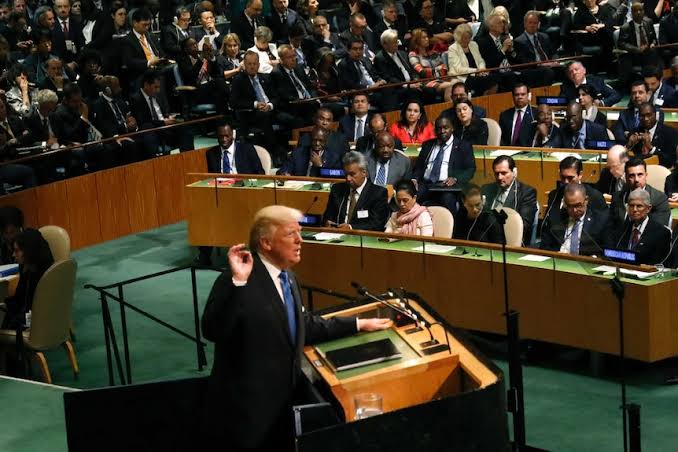
INTERNATIONAL SNUB…2 major world leaders reportedly refuse private talks with Trump raising diplomatic alarm bells,
alarming reports have emerged from the highest levels of global diplomacy suggesting that two major world leaders have declined private, one-on-one talks with U.S. President Donald J. Trump — a development that has raised serious concerns among foreign policy analysts and capitals around the globe….Give 2 reasons⤵️⤵️
EU considers retaliatory measures over Trump Greenland tariff ‘blackmail’
3 days ago
Trump airing Macron’s private message was designed to hurt and intimidate
The Guardian
Trump airing Macron’s private message was designed to hurt and intimidate
Yesterday
Trump’s Board of Peace is dividing countries in Europe and the Middle East
AP News
Trump’s Board of Peace is dividing countries in Europe and the Middle East
Yesterday
INTERNATIONAL SNUB: Two Major World Leaders Reportedly Refuse Private Talks with Trump, Raising Diplomatic Alarm Bells
In recent days, alarming reports have emerged from the highest levels of global diplomacy suggesting that two major world leaders have declined private, one-on-one talks with U.S. President Donald J. Trump — a development that has raised serious concerns among foreign policy analysts and capitals around the globe.
Here’s an in-depth look at what’s happening, why it matters, and what it could mean for global politics.
🔥 What’s Happening? The Reported Snubs
1. French President Emmanuel Macron
According to multiple news outlets and diplomatic leaks circulating this week, French President Emmanuel Macron has resisted private, unsupervised discussions with President Trump — particularly after Trump publicly released private text messages he received from Macron. Critics say the move was meant to embarrass European leaders and has chilled frank diplomatic exchanges.
Macron and other European allies have publicly criticized Trump’s recent diplomatic tactics as unpredictable and undermining trust among long-standing partners. Macron’s office has not confirmed a specific refusal of a one-on-one meeting, but several senior French diplomats are reported to be wary of engaging without clear agendas and safeguards.
2. A European Power Opting Out of Trump’s “Board of Peace”
An equally significant snub came as France, Norway, and Sweden declined to join President Trump’s newly announced international initiative, the “Board of Peace.” This board — pitched by Washington as a voluntary coalition to help resolve global conflicts — has been framed by critics as a parallel structure to the United Nations, with opaque mandates and broad executive powers.
Although not a direct bilateral refusal, the decision by these major Western powers to stay on the sidelines is being read in diplomatic circles as a deliberate distancing from Trump’s personal diplomatic agenda, especially in contexts where private negotiations and informal consultations are preferred by Trump’s team.
🌍 Context: Why It Matters
These reported snubs are more than just headlines — they come amid mounting tensions between the U.S. and several of its closest allies over foreign policy direction:
🔹 European Resistance to U.S. Pressure
Europe has been openly critical of Trump’s recent hardline tactics, including threats of tariffs over issues like Greenland’s sovereignty, which European leaders have denounced as coercion.
French and other Western leaders argue that such tactics undermine the cooperative frameworks that have anchored transatlantic relations since WWII. Macron in particular has cautioned that the U.S. under Trump appears to be “turning away” from traditional alliances and norms.
🔹 Trump’s Diplomatic Style
Experts say Trump’s diplomacy tends toward informal and personalized engagement — often sharing private messages publicly, and favoring direct conversations over structured, multilateral talks. While this can sometimes cut through protocol, critics argue it weakens institutional trust and makes leaders wary of private, unsupervised discussions.
Trump’s new Board of Peace initiative has also deepened these divisions, with dozens of nations participating but key Western powers consciously stepping back, citing concerns about its scope and potential to undermine the United Nations system.
📉 Potential Diplomatic Fallout
The implications of these snubs go well beyond ego clashes or political theater:
⚠️ Eroding Trust Among Allies
A reluctance by major leaders to engage privately with the U.S. president signals a breakdown in confidence. Diplomacy often depends on discreet, high-level talks to resolve tensions — and when such talks stall, misunderstandings can escalate. Analysts warn this could spill over into cooperation in areas like security, trade, and global crises such as the wars in Ukraine and the Middle East.
⚠️ Fragmentation of Traditional Institutions
European resistance to Trump’s unilateral initiatives suggests an emerging two-track diplomacy, where Western allies may strengthen their own multilateral frameworks (EU, NATO) independent of U.S. leadership.
⚠️ Impact on Global Negotiations
From climate policy to conflict mediation and trade deals, the absence of close coordination between Washington and key capitals complicates efforts to forge consensus — especially on issues where U.S. leadership has historically been pivotal.
🧠 What Experts Are Saying
Foreign policy analysts have warned that these diplomatic snubs are symptomatic of deeper structural frictions:
Alliance fatigue: Long-standing allies are pushing back against what they see as unpredictable U.S. policies and public rhetoric.
Institutional distrust: The public airing of private communications and ad-hoc diplomatic projects are seen as destabilizing traditional discourse.
Multipolar recalibration: Other global powers — from China to regional blocs — are watching these rifts and adjusting their strategies in response.
📌 Bottom Line
The reported refusal of private talks from two major world leaders — whether direct (in the case of Macron) or symbolic (as seen with key European states opting out of Trump’s initiatives) — represents a significant diplomatic signal. It suggests Washington’s traditional role as the hub of allied coordination is being questioned, with potential long-term effects on global governance and U.S. foreign policy influence.

INTERNATIONAL SNUB…2 major world leaders reportedly refuse private talks with Trump raising diplomatic alarm bells, alarming reports have emerged from the highest levels of global diplomacy suggesting that two major world leaders have declined private, one-on-one talks with U.S. President Donald J. Trump — a development that has raised serious concerns among foreign policy analysts and capitals around the globe….Give 2 reasons⤵️⤵️

LEGAL PRESSURE MOUNT…major Allies scramble after surprise court filling triggers emergency crisis meetings…. sources revealed that the crisis is only beginning — and that the next 48 hours could reshape global alliances permanently… Curious to learn about the unfolding situation and what’s at stake….⬇️⬇️

BREAKING NEWS….White house meltdown rumor Former Trump advisers report total chaos Behind close doors 2026 strategic collapse…Read the full breakdown and see what this means for Trump future⬇️⬇️

BREAKING….TRUMP CAMPAIGN IN TURMOIL: Key Donors Quietly Pull Funding After Shock Internal Poll Leak Sends Panic.Why it matter and how Trump is responding to the fallout…Full analysis inside….
SUPREME COURT UNLEASHES SECRET RULING ON TRUMP — 72-HOUR DEADLINE SPARKS TOTAL LEGAL CHAOS, White House in SHEER PANIC, Allies Scattering Amid Jaw-Dropping Revelations Fueling Escalating Scandal and Nationwide Political Uproar! ⚡ But insiders claim a bombshell from a court clerk source: the ruling hides even more jaw-dropping classified intel linking Trump to international players, potentially flipping witnesses in hours. The full dossier is going viral right now, and the internet can’t stop talking

JUST IN…T.R.U.M.P FROZEN IN SHOCK: Greenland Takeover BACKFIRES — EU & Canada Unleash $100B Economic WAR! You won’t believe the secret move in the forgotten trade pact that triggered the entire crisis — discover explosive details!! 👇👇👇

WORLD LEADERS SCREAM AT T̄R̄UMP — Then THIS LEAKS, White House Panic Ignites as Global Fury Escalates in Explosive Showdown! ⚡ What started as a tense international summit suddenly detonated when furious world leaders confronted T̄R̄UMP head-on, their heated screams echoing through the halls before a mysterious leak sent everything spiraling into chaos. T̄R̄UMP reportedly lost it behind closed doors, firing off furious denials as “foreign sabotage,” while diplomats stood firm in stunned solidarity—insiders claim leaked audio hints at frantic Oval Office huddles, fueling whispers of deeper betrayals exposed in real time. The confrontation exploded online, fans can’t believe the raw intensity, reportedly trending across platforms as outrage surges worldwide. the internet can’t stop talking about this world-shaking scandal that’s leaving America reeling…👇

T.R.U.M.P FROZEN IN SHOCK: Wisconsin Dairy Farms IMPLODE Overnight — Canada SLAMS $4 BILLION U.S. Milk Flood with BRUTAL NEW BARRIERS! 🥛🇨🇦🇺🇸 sending farms into chaotic freefall and paralyzing supply chains across the heartland. Trump, caught off guard and screaming in fury from the Oval Office, You won’t believe the hidden clause that triggered the entire crisis.why this matter….see more 👇 👇
