
NFL
JUST IN…”Canada & Mexico Close the Line Before T.r.u.m.p — Mark Carney Quietly Sets the Stage for CUSMA 2026… As Don@ld T.r.u.m.p signals tough changes to CUSMA, the reaction in the North is quiet—but clear. Canada and Mexico are working closely together, forming a common front ahead of the 2026 review. New demands from Washington—from milk and automobiles to enforcement rights—have prompted Ottawa to accelerate preparations. The detail that makes Washington’s next move difficult to predict lies below 👇👇

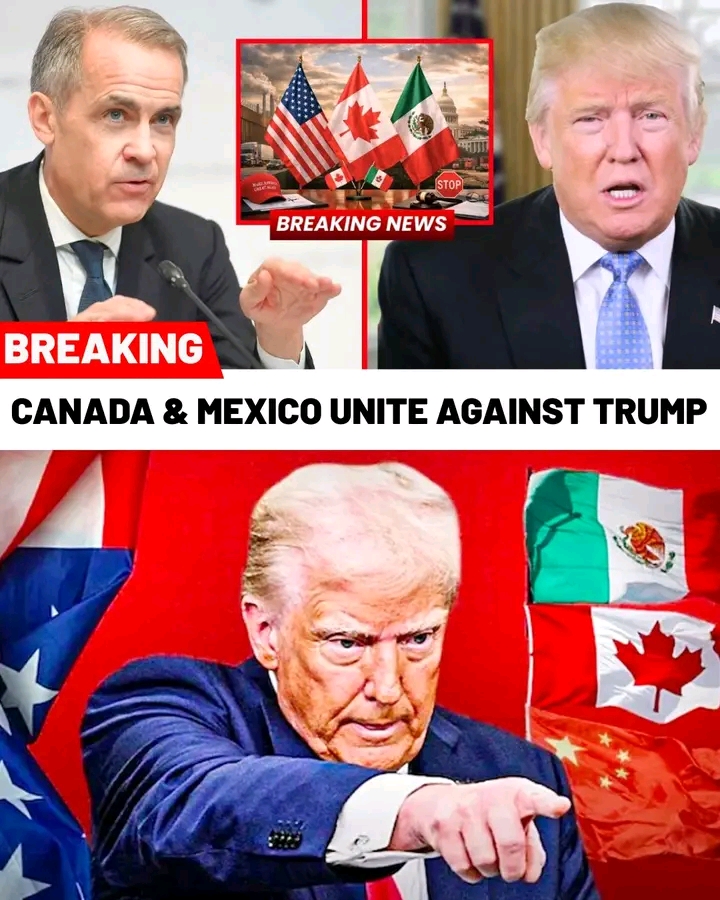
JUST IN…”Canada & Mexico Close the Line Before T.r.u.m.p — Mark Carney Quietly Sets the Stage for CUSMA 2026…
As Don@ld T.r.u.m.p signals tough changes to CUSMA, the reaction in the North is quiet—but clear. Canada and Mexico are working closely together, forming a common front ahead of the 2026 review.
New demands from Washington—from milk and automobiles to enforcement rights—have prompted Ottawa to accelerate preparations. The detail that makes Washington’s next move difficult to predict lies below 👇👇
Under Carney’s leadership, Canada is not only working closely with Mexico but also mobilizing domestic resources, bringing together provinces to lock down the negotiating strategy.
No verbal sparring. No ultimatums.
Just laying the groundwork—so that when 2026 arrives, where the leverage lies will no longer be a question.
👉 The detail that makes Washington’s next move difficult to predict lies below 👇👇
Canada & Mexico Close the Line Before T.r.u.m.p — Mark Carney Quietly Sets the Stage for CUSMA 2026
There are no podium speeches.
No dramatic threats.
No televised sparring matches.
But behind closed doors, something significant is happening in North America — and Washington is watching it unfold with growing unease.
As Don@ld T.r.u.m.p signals that a second term would bring aggressive changes to CUSMA, Canada and Mexico are already moving. Quietly. Methodically. Together.
And at the center of Canada’s preparation is Prime Minister Mark Carney, applying a very different style of political power: financial discipline, institutional coordination, and pre-emptive leverage building.
No theatrics.
Just structure.
The 2026 Review Is Coming — And Everyone Knows It Will Be a Fight
CUSMA’s mandatory review clause in 2026 was designed as a safeguard. But in a Trump-era trade environment, it becomes a pressure point — a chance for Washington to reopen disputes on:
• Dairy and milk quotas
• Automotive production rules
• Cross-border enforcement authority
• Energy and environmental provisions
• Dispute-resolution mechanisms
Trump’s team has already signaled they want hard renegotiation, not routine review.
Which means: whoever arrives unprepared will negotiate from weakness.
Carney has no intention of letting Canada be that party.
The New Strategy: Lock Mexico In First
Rather than waiting for Washington’s opening demands, Ottawa has accelerated bilateral coordination with Mexico — something previous Canadian governments only did loosely.
Trade officials from both countries are now:
• Aligning negotiation red lines
• Sharing tariff-impact modeling
• Coordinating legal interpretations of CUSMA review clauses
• Establishing joint response frameworks for U.S. enforcement actions
This matters because in any three-party trade deal, unity between the smaller partners dramatically shifts leverage.
If Canada and Mexico present separate positions, Washington plays them against each other.
If they arrive aligned, Washington faces a bloc.
Carney understands markets.
He also understands game theory.
Domestic Groundwork: Provinces Are Being Locked In Early
Another quiet move: Carney has convened premiers into early consensus-building sessions on trade posture.
This prevents a classic Canadian vulnerability — internal fragmentation during negotiation — where provinces lobby Washington directly to carve exceptions.
By locking provincial buy-in before the review begins, Carney ensures:
• Unified messaging
• Reduced domestic political leakage
• Faster response authority during talks
Again: no headlines.
But extremely effective statecraft.
Why Washington Is Now Less Predictable
Traditionally, U.S. negotiators could assume Canada and Mexico would arrive reactive — waiting to hear America’s opening bid.
Now, they may arrive with joint pre-drafted counter-positions, coordinated fallback scenarios, and synchronized escalation options.
That changes everything.
Because if Washington overreaches, both partners can respond instantly — not scramble to coordinate after the fact.
This compresses America’s window to apply pressure.
And in negotiation, timing control is power.
Carney’s Advantage: He Speaks Trump’s Language
Unlike traditional politicians, Carney’s background in global finance means he understands:
•

TARIFF HYPOCRISY SHOCKER: CARNEY EXPOSES T̄R̄UMP’S HYPOCRISY After 100% TARIFF THREAT to CANADA — White House Meltdown Ignites Fury, Diplomatic Clash Escalates to Breaking Point! ⚡ The confrontation exploded online, fans can’t believe the raw takedown, reportedly trending across platforms as outrage surges globally. The full clip is going viral—watch before it’s taken down, as the internet can’t stop talking about this world-shaking scandal that’s leaving America reeling…⤵️⤵️

CANADA DROPS THE BOMB: “Keep Your Tariffs — Lose Your Uranium” — Trump SCRAMBLES as Energy Grid Faces Collapse 👉 Insiders reveal the emergency call that shook Washington — See the classified briefing that sent aides into chaos 👇

BREAKING: 20 MINUTES AGO — BREAKING on MS NOW: Jack Smith Unveils UNDENIABLE Evidence, and T.r.u.m.p’s Lawyers Are in a PANIC. ⚡ Walking into a Republican-controlled House Judiciary Committee, Jack Smith calmly shattered the “witch hunt” narrative and put everything on the record. In his opening statement, Smith declared: “Our investigation developed proof beyond a reasonable doubt that President T.r.u.m.p engaged in a criminal scheme to overturn the results of the 2020 presidential election and to prevent the lawful transfer of power.” Smith told lawmakers that T.r.u.m.p broke the law, attempted to overturn the election, and would do so again if given the chance because…..Full details ⤵️

JUST IN…”Canada & Mexico Close the Line Before T.r.u.m.p — Mark Carney Quietly Sets the Stage for CUSMA 2026… As Don@ld T.r.u.m.p signals tough changes to CUSMA, the reaction in the North is quiet—but clear. Canada and Mexico are working closely together, forming a common front ahead of the 2026 review. New demands from Washington—from milk and automobiles to enforcement rights—have prompted Ottawa to accelerate preparations. The detail that makes Washington’s next move difficult to predict lies below 👇👇

HOT NEWS: 30 minutes ago, tension exploded on Capitol Hill after Special Counsel Jack Smith formally demanded that Rep. Jim Jordan release the full video of his eight-hour, closed-door testimony before the House Judiciary Committee — a move insiders say instantly rattled Republican leadership. But the real bombshell? What investigators are now signaling could be revealed if the footage goes public — a detail Jordan allegedly shared behind closed doors that could ignite a political firestorm across Congress and the Justice Department alike. Sources claim Smith’s request was delivered with language so direct, so uncompromising, that senior aides described the atmosphere as “ice-cold panic.”Full details ⤵️

Trump HUMILIATED as Judge Reads Ruling He Tried to SEAL⚡. The United States is facing a serious crisis tonight—but not because of a government shutdown. The real concern is the growing alarm over the president’s fitness to lead. After a public appearance today, critics argue that the president showed signs of mental and emotional instability, raising fears about judgment, leadership, and the immense responsibility of holding nuclear authority. At the same time, Donald Trump suffered a major legal setback in federal court. A judge ordered the immediate unsealing of documents Trump fought hard to keep secret, ruling that the public’s right to know outweighs his claims of secrecy. Legal experts say the ruling sends a clear message: secrecy and delay tactics won’t shield powerful figures from accountability. The fallout from these disclosures is only beginning—and it could reshape Trump’s legal and political future…see more 👇 👇
LIVE TV BACKFIRE: Barron Trump MOCKS Rep. Jasmine Crockett — Her CALM, CUTTING Response Flips the Script and Sends MAGA World Into DAMAGE-CONTROL MODE ⚡ According to reports circulating online, the comment drew immediate attention — but it was Crockett’s response that changed everything. Instead of taking the bait, Crockett delivered a composed, razor-sharp reply that dismantled the jab point by point, earning audible reactions from the audience and instant traction across social media. The shift was unmistakable: laughter faded, tension spiked, and the moment took on a life of its own. One observer described it as “the kind of calm comeback that leaves no room to escalate.” Clips spread fast. Supporters praised Crockett’s restraint and clarity, while MAGA influencers rushed to reframe the exchange. Sources claim Trump-world operatives scrambled to cool the reaction as the segment dominated feeds and comment sections. Within hours, the narrative had flipped — not because of shouting or insults, but because of a response that refused to play along. 🎥 Watch the on-air exchange that viewers say turned the tables in real time — the viral moment that sent political Twitter into overdrive before it vanishes from your feed 👇👇

BREAKING…: America’s China Blockade COLLAPSES — Canada Signs Shock Deal, Washington in FULL PANIC 👇 See the agreement the U.S. never saw coming and watch how it backfire…

BREAKING TWIST: T.R.U.M.P FLEES TO MAR-A-LAGO AND SLAMMED WITH NASTY COURT ORDER — EMPIRE COLLAPSE LOOMS IN LEGAL FIRESTORM PRESIDENT DONALD TRUMP reportedly rushed to his luxurious MAR-A-LAGO retreat seeking refuge, only to be blindsided by a brutal court order that threatens to strip control of his prized empire. What began as a quiet escape amid mounting pressures has erupted into a full-scale scandal, with the surprise ruling sending shockwaves through his inner circle and beyond. TRUMP’S team has lashed out furiously, calling the decision a “”witch hunt”” and vowing fierce appeals, while critics cheer it as long-overdue justice. Public reaction has exploded online, with the full details trending across platforms under hashtags fans can’t believe their eyes as the once-unbreakable fortress faces potential collapse. ⚠️The internet can’t stop talking about this explosive twist—watch before it’s taken down and dive into the comments for the unfiltered outrage and theories! 👇👇

“Authoritarian Conduct” — Federal Judge’s Words Ignite Firestorm Around Trump Legal Strategy 👉 Legal analysts say this is a historic warning. Final Notice Served see what’s on the table