
NEWS
BREAKING: Canada has abruptly pulled the plug on the U.S. auto supply chain — Detroit is in panic mode. Assembly lines across Michigan, Ohio, and Indiana are grinding to a halt, factories are issuing emergency shutdowns, and critical parts are being rerouted to Europe and Asia. Industry insiders are calling this the worst supply-chain shock in modern U.S. automotive history. While America reels, Canada is accelerating: factories are running at capacity, battery investment is surging, and its EV sector is being tightly protected. Tens of thousands of U.S. auto jobs are now at risk. One iconic automaker has issued a “Code Red” crisis warning. Which U.S. automaker just sounded the alarm? FIND OUT BELOW

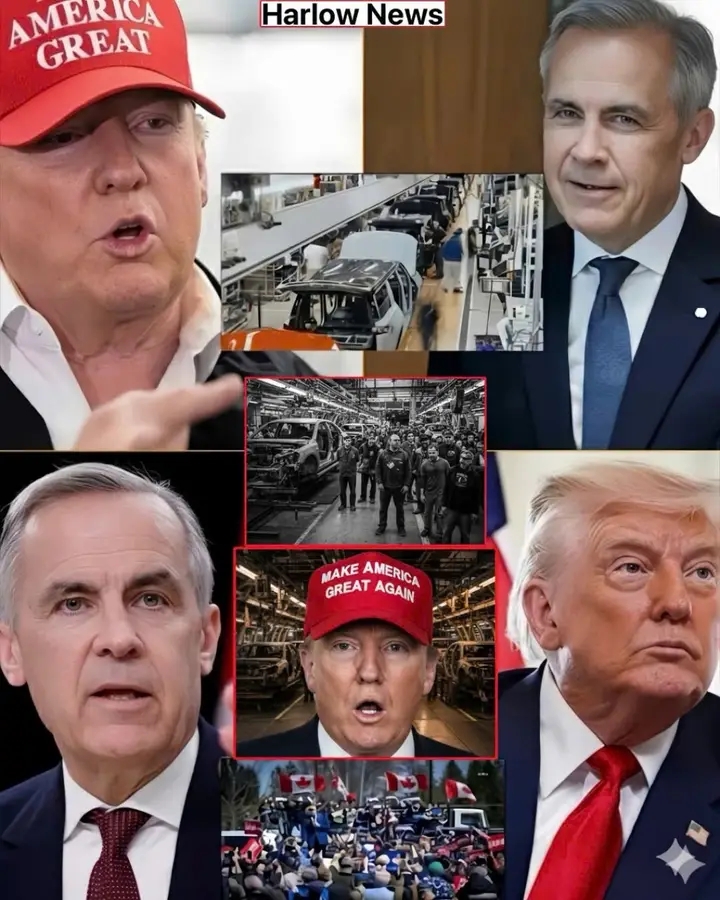
BREAKING: Canada has abruptly pulled the plug on the U.S. auto supply chain — Detroit is in panic mode.
Assembly lines across Michigan, Ohio, and Indiana are grinding to a halt, factories are issuing emergency shutdowns, and critical parts are being rerouted to Europe and Asia.
Industry insiders are calling this the worst supply-chain shock in modern U.S. automotive history.
While America reels, Canada is accelerating: factories are running at capacity, battery investment is surging, and its EV sector is being tightly protected.
Tens of thousands of U.S. auto jobs are now at risk.
One iconic automaker has issued a “Code Red” crisis warning.
Which U.S. automaker just sounded the alarm?
FIND OUT BELOW
BREAKING: CANADA PULLS THE PLUG ON U.S. AUTO SUPPLY CHAIN — DETROIT IN PANIC MODE
Fictional dramatized scenario
The North American auto industry just jolted awake to a nightmare scenario no one thought would happen this fast.
In a sudden and sweeping move, Canada has severed critical supply-chain flows feeding U.S. auto manufacturing, triggering emergency shutdowns across assembly plants in Michigan, Ohio, and Indiana. Trucks that once crossed the border hourly with engines, battery modules, aluminum castings, and semiconductor housings are now being redirected — not south — but east to Europe and west to Asia.
By sunrise, Detroit knew it had a crisis.
Assembly Lines Go Silent
Multiple U.S. plants initiated immediate “temporary idle” procedures overnight. Workers arriving for morning shifts were met with locked gates, blinking red alert lights, and hastily printed notices citing “unavailability of essential components.”
Inside industry chat channels, one phrase spread fast:
“Canada pulled the plug.”
The Shockwave No One Modeled
For decades, the U.S. and Canadian auto sectors functioned like a single mechanical organism — parts crossing borders sometimes five or six times before final assembly. That invisible integration is now suddenly fractured.
An executive at a major Midwest supplier described the moment bluntly:
“It’s like someone reached into the engine compartment and ripped out the wiring harness while we were driving.”
Canada Accelerates While America Scrambles
North of the border, a very different scene is unfolding.
Canadian battery plants are running at full capacity. EV investment pipelines are expanding. Government industrial protection measures have quietly tightened. Ports in Vancouver and Halifax are reporting unprecedented outbound auto-component shipments — but almost none destined for the United States.
Instead: Germany. South Korea. Japan. India.
A senior logistics officer described the pivot:
“The flow just changed direction overnight.”
Detroit Declares Code Red
Late last night, one iconic American automaker issued an internal “Code Red Supply Crisis” alert — the highest emergency classification in its operational playbook. Production forecasts were slashed. Contingency sourcing teams were activated. Executive war rooms were established before midnight.
A leaked line from the internal bulletin:
“If Canadian supply is not restored within ten days, North American production continuity cannot be guaranteed.”
Jobs on the Line
Analysts warn tens of thousands of U.S. auto jobs could face furlough or elimination if the disruption holds. Secondary suppliers, tool-and-die shops, transport firms, and steel processors are already bracing.
One union representative said quietly:
“If this lasts, it’s not just a slowdown. It’s a structural break.”
Washington Watches — For Now
Federal officials have not yet commented publicly. Behind the scenes, emergency trade and diplomatic channels are reportedly being activated. But insiders warn this crisis is moving faster than political response time.
And the Big Question:
Which U.S. automaker just sounded the Code Red alarm?
Industry insiders say the name will shock markets when confirmed.
👇 Click below to find out

BREAKING: Canada STRIKES BACK at Trump — American Alcohol Quietly DISAPPEARS Don@ld T.r.u.m.p thought pressure would work. Instead, Canada laughed… and pulled American alcohol off the shelves. No protests. No speeches. Just a silent move that’s now hitting U.S. brands where it hurts most. A new poll shows Canadians aren’t backing down — they’re doubling down. Even Trump’s team didn’t expect this reaction. 👉 What happened next behind the scenes is raising eyebrows…

BREAKING: Canada has abruptly pulled the plug on the U.S. auto supply chain — Detroit is in panic mode. Assembly lines across Michigan, Ohio, and Indiana are grinding to a halt, factories are issuing emergency shutdowns, and critical parts are being rerouted to Europe and Asia. Industry insiders are calling this the worst supply-chain shock in modern U.S. automotive history. While America reels, Canada is accelerating: factories are running at capacity, battery investment is surging, and its EV sector is being tightly protected. Tens of thousands of U.S. auto jobs are now at risk. One iconic automaker has issued a “Code Red” crisis warning. Which U.S. automaker just sounded the alarm? FIND OUT BELOW

BREAKING: UK QUIETLY DEPLOYS TROOPS TO GREENLAND — “THIS IS HOW IT STARTS” One soldier today. An army tomorrow?Is NATO drifting toward a secret Arctic standoff? 👉 See the leaked briefing document 👇

JUST IN….A routine diplomatic meeting took an unexpected turn when German leader Friedrich Merz presented President Donald Trump with a copy of his grandfather’s birth certificate, underscoring Trump’s immigrant family history. Trump’s grandfather, Frederick Trump, was born in Germany before immigrating to the United States in the late 1800s. The symbolic gift immediately ignited backlash and debate online, with critics Within hours, social media lit up with arguments over identity, heritage, and hypocrisy, Read the full breakdown to understand why the Internet can’t stop talking..
JUST IN: Rep. Calder Voss CONFIRMS Even “Fully Legal Citizens” Could Face Removal Under New Fraud Bill 👉 Watch the fiery floor speech that set the chamber on fire 🔥

WASHINGTON ON EDGE: SEN. MARK KELLY FILES EXPLOSIVE LAWSUIT AGAINST THE PENTAGON — AND TRUMP’S UNEXPLAINED POSTURE IS SETTING OFF QUIET ALARMS ⚖️🔥 A federal lawsuit has just landed in Washington, and while the filing names Pete Hegseth and the Department of Defense, the real tension is forming elsewhere. Capitol Hill insiders say this isn’t just a legal dispute — it’s a pressure point that suddenly pulls Donald Trump into the frame. What triggered the lawsuit is only part of the story. Behind the scenes, timing, language, and silence from key figures are raising sharper questions than the paperwork itself. Is this discipline? A loyalty signal? Or a calculated test of how far authority can stretch before it snaps? who benefits from this move — and who may be next if it holds? SEE WHY THE INTERNET CHAT STOP TALKING ABOUT THIS JAW DROPPING BREAKDOWN

ARCTIC BLOCKADE BOMBSHELL: HOUSE AND SENATE SECURE VOTES for BIPARTISAN NATO UNITY PROTECTION ACT — Explicitly BLOCKING T̄R̄UMP from MILITARY FORCE on GREENLAND, NATO Allies Ignite Fury in Escalating Global Clash! ⚡ In a shocking turn of events, what started as tense Capitol negotiations detonated into a bipartisan rebellion when lawmakers rallied to pass a groundbreaking act, leaving the White House scrambling amid whispers of thwarted ambitions in the frozen north. T̄R̄UMP’S has just suffered what may be the most devastating legal defeat of his political career…

BREAKING News…Canada Slips Into a European Defense System — Washington Notices Late No announcement. No headlines. Just paperwork quietly signed. The details are worse than the headline….see more

BOMBSHELL: T̄R̄UMP SCREAMS as SENATE DEMANDS STEP DOWN NOW — White House Chaos Ignites as Betrayals Explode and Impeachment Whispers Escalate to Breaking Point! ⚡ In a shocking turn of events, what started as a tense Senate session detonated into outright rebellion when lawmakers unleashed a blistering demand for President T̄R̄UMP’s resignation, leaving the chamber in stunned silence amid whispers of irreversible fallout. T̄R̄UMP’s reaction reportedly boiled over with raw fury, while his allies scrambled in denial mode—insiders claim leaked memos hint at frantic Oval Office huddles, fueling speculation of deeper fractures within his inner circle as the base begins to waver. The meltdown exploded online, fans can’t believe the Senate’s bold stand, reportedly trending across platforms as calls for action surge nationwide. The details are worse than the headlines read before this changes…see more

BREAKING NEWS…“Chaos in D.C.: VP Vance Breaks Tie to Let Trump Launch Full-Scale Attack on Venezuela!” See which Senators voted to Trigger World War lll 👉 Watch the Shocking Video Reaction!

GLOBAL SHOCKWAVE: Putin ‘Issues Stark Warning’ to Trump Over Greenland Move — World Leaders Hold Their Breath! 👉 See what sparked the sudden international panic 👇 WATCH what prostesters are saying about the threat….
