
NEWS
BREAKING NEWS….Pentagon ERUPTS as Canada Reopens Fighter Jet Choice — Washington Loses Its Grip 🇨🇦🇺🇸 For decades, Canada’s air force decisions were treated as automatic extensions of U.S. power. But behind closed doors, that assumption just cracked. What started as a routine defense procurement has turned into something far more unsettling for Washington — a signal that Ottawa is no longer willing to outsource control, data, and long-term strategy without question. The anger in the Pentagon isn’t about one aircraft. It’s about what slipping control really means. What truly rattled U.S. defense officials wasn’t cost overruns or delivery delays — it was the possibility that Canada might choose autonomy over dependency. Control over software, Arctic surveillance, NORAD integration, and future upgrades has quietly become the real battlefield. If Canada proves it can defend itself without locking into a single American ecosystem, a precedent is set — and that’s when leverage doesn’t just weaken, it evaporates. 👉 The story is still unfolding… See what happens next

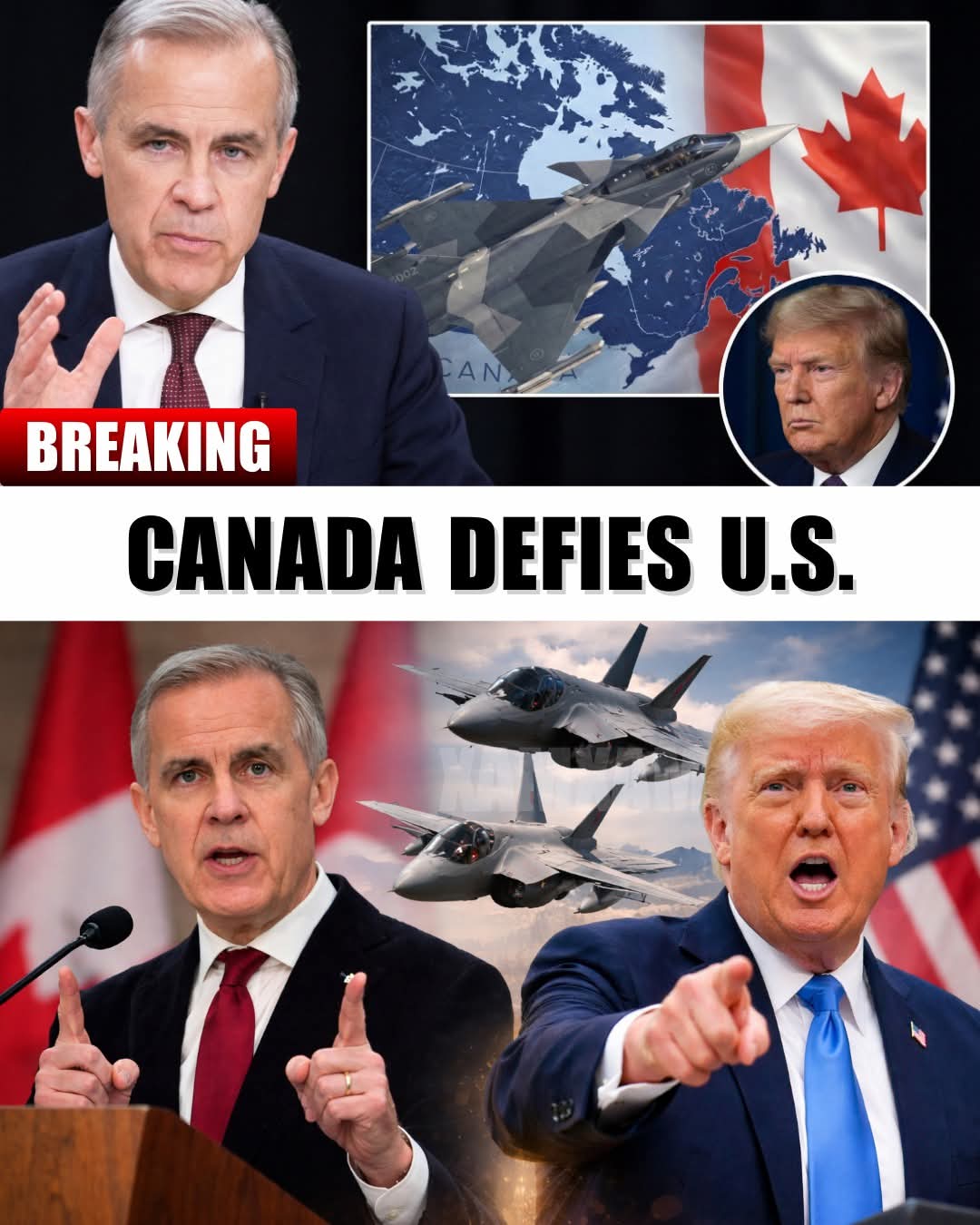
BREAKING NEWS….Pentagon ERUPTS as Canada Reopens Fighter Jet Choice — Washington Loses Its Grip 🇨🇦🇺🇸
For decades, Canada’s air force decisions were treated as automatic extensions of U.S. power. But behind closed doors, that assumption just cracked. What started as a routine defense procurement has turned into something far more unsettling for Washington — a signal that Ottawa is no longer willing to outsource control, data, and long-term strategy without question. The anger in the Pentagon isn’t about one aircraft. It’s about what slipping control really means.
What truly rattled U.S. defense officials wasn’t cost overruns or delivery delays — it was the possibility that Canada might choose autonomy over dependency. Control over software, Arctic surveillance, NORAD integration, and future upgrades has quietly become the real battlefield. If Canada proves it can defend itself without locking into a single American ecosystem, a precedent is set — and that’s when leverage doesn’t just weaken, it evaporates.
👉 The story is still unfolding… See what happens next
For decades, Canada’s military procurement decisions were considered predictable — almost automatic extensions of American defense strategy. When Washington built, Ottawa bought. When the Pentagon upgraded, Canada followed. The relationship was seamless, tightly integrated, and quietly assumed to be permanent.
But that assumption has just cracked.
Behind closed doors, Canada has reopened its fighter jet decision process — a move that has sent shockwaves through the Pentagon. What was once treated as a settled deal is suddenly back on the table. And in Washington, the reaction is not confusion. It’s fury.
Because this isn’t really about jets.
It’s about control.
A Decision That Was Never Supposed to Be Reconsidered
For years, U.S. defense planners viewed Canada’s air force modernization as a locked path into the American defense ecosystem — shared software architecture, shared intelligence pipelines, shared command integration through NORAD, and long-term dependence on U.S.-controlled upgrades.
That ecosystem doesn’t just sell aircraft.
It sells alignment.
It sells reliance.
It sells leverage.
Reopening the fighter decision signals something Washington never expected to see from Ottawa: a willingness to question dependency itself.
The Real Battlefield: Software, Data, and Sovereignty
Sources familiar with defense discussions say Pentagon officials are less worried about which aircraft Canada might choose — and far more alarmed by what Canada is now demanding in negotiations:
• Greater control over mission software
• Independent upgrade authority
• Sovereign data handling
• Autonomous Arctic surveillance capability
• Reduced reliance on U.S.-managed logistics chains
In modern warfare, whoever controls the software controls the aircraft. Whoever controls the data controls the battlefield. And whoever controls upgrades controls long-term allegiance.
Canada is now signaling it wants all three.
That, insiders say, is what set off alarms in Washington.
Why the Pentagon Is Rattled
If Canada proves it can maintain a world-class air force without permanent lock-in to U.S. defense infrastructure, a precedent is born.
Other allied nations would take notice.
Procurement models would shift.
U.S. defense leverage would shrink.
The fear inside the Pentagon is not that Canada leaves the partnership — but that Canada demonstrates alternatives exist.
Once that idea spreads, Washington’s grip on allied defense ecosystems doesn’t just loosen.
It evaporates.
Arctic Stakes and the NORAD Question
Nowhere is this tension sharper than in the Arctic.
As polar routes open and global powers race for northern access, Canada’s role in continental defense has never been more strategically vital. NORAD integration has long ensured U.S. oversight of northern surveillance.
But if Canada builds or acquires systems that operate outside full American control, the balance inside NORAD itself changes.
Quietly. Fundamentally. Permanently.
Ottawa’s Message: Partnership, Not Permission
Canadian defense officials have been careful not to frame this as a break with Washington. Publicly, it’s about “reviewing capabilities” and “ensuring best value.”
Privately, the message is clearer:
Canada will remain an ally — but no longer a default dependency.
What Happens Next
Negotiations are ongoing. Lobbying is intense. Diplomatic pressure is mounting. And defense contractors on both sides of the border are scrambling to influence the outcome.
But the shift has already occurred.
The question is no longer which fighter Canada will buy.
The question is whether Canada is rewriting the rules of alliance power — and whether Washington can stop it.
👉 The story is still unfolding… and what happens next may change everything.
BREAKING: Canada slaps down Trump, signals military response if Greenland is invaded. Discover how Canada’s bold move towards the United States regarding Greenland is reshaping global politics – Read more

SHOCKING: CANADA–DENMARK PACT LOCKS THE U.S. OUT OF GREENLAND — TRUMP HAS NO CARDS 🇨🇦 🇩🇰 Canada and Denmark have just finalized a surprise bilateral pact that effectively cuts the United States out of Greenland’s strategic future, leaving Washington stunned. Sources say the agreement tightens control over Arctic access, security coordination, and critical infrastructure, shutting down any room for U.S. maneuvering. Analysts warn this move redraws the Arctic chessboard overnight, stripping Trump of leverage and exposing how isolated the U.S. position has become. Insiders say there was no contingency plan, no counterplay — and no cards left to play. 👇 Why this pact changes everything in the Arctic — and why the U.S. can’t undo it — is now sending shockwaves through global power circles.”

BREAKING…T.r.u.m.p imposes lumber tariffs — Canada strikes back with a $1B plan, catching Washington completely off guard. Instead of backing down, Ottawa ramped up production, expanded sawmill capacity, and redirected lumber exports to Europe and Asia, immediately tightening supply in the U.S. Construction costs in America surged, the housing market wobbled, and Trump’s tariff strategy was effectively neutralized. The country that signed a major lumber deal with Canada right after T.r.u.m.p’s move will shock you — see details

BREAKING: T.R.U.M.P SLAPS POTASH TARIFFS — BUT CANADA EMERGES THE BIG WINNER AS U.S. FARMERS COLLAPSE! A trade disaster is sweeping across the United States after T.r.u.m.p’s potash tariffs completely backfired. Instead of squeezing Canada, the policy is driving American farmers into their worst crisis in years. At an emergency meeting at the U.S. Department of Agriculture, a senior T.r.u.m.p adviser reportedly admitted in despair: Analysts are calling this “T.r.u.m.p’s worst trade failure of the year” — a political pressure tactic that turned into a disaster for the very people he claimed to protect. But what Washington fears most is revealed below

BREAKING: Trump SCARED TO DEATH as Special Counsel Hands TREMBLING Evidence! 🔥 💥 In a heart-pounding courtroom showdown that’s leaving the nation breathless, Special Counsel Jack Smith has DELIVERED a mountain of TREMBLING evidence against President Trump — exposing alleged crimes that have him visibly SHAKEN and terrified of what’s coming next! 😱 WOW! ⚡ The bombshell handover includes classified docs, witness testimonies, and irrefutable proof of obstruction and election interference — sending Trump’s legal team into PANIC MODE as the walls close in faster than ever! 🚨 WOW! SHOCKING details of the trembling evidence and Trump’s terrified reaction are even MORE EXPLOSIVE than the headline!
JUST IN…Trump SPEECHLESS As NEW AFFAIR BOMBSHELL Just SHOCKED HIS ALLIES⚡ Donald Trump survived scandals that would have ended any normal political career, and that culture of zero accountability has spread everywhere. Now, former Senator Kyrsten Sinema is at the center of a disturbing lawsuit that shows exactly how power gets abused. Sinema is being sued under North Carolina’s “alienation of affection” law by the ex-wife of her former bodyguard. The lawsuit alleges that while serving as a U.S. senator, Sinema had an affair with her married subordinate, promoted him, gave him lavish trips, financial rewards, and blurred every professional boundary imaginable….More shocking details 👇 👇

BREAKING NEWS….Pentagon ERUPTS as Canada Reopens Fighter Jet Choice — Washington Loses Its Grip 🇨🇦🇺🇸 For decades, Canada’s air force decisions were treated as automatic extensions of U.S. power. But behind closed doors, that assumption just cracked. What started as a routine defense procurement has turned into something far more unsettling for Washington — a signal that Ottawa is no longer willing to outsource control, data, and long-term strategy without question. The anger in the Pentagon isn’t about one aircraft. It’s about what slipping control really means. What truly rattled U.S. defense officials wasn’t cost overruns or delivery delays — it was the possibility that Canada might choose autonomy over dependency. Control over software, Arctic surveillance, NORAD integration, and future upgrades has quietly become the real battlefield. If Canada proves it can defend itself without locking into a single American ecosystem, a precedent is set — and that’s when leverage doesn’t just weaken, it evaporates. 👉 The story is still unfolding… See what happens next
