
NEWS
JUST IN…Congresswoman’s ‘Slave Patrol’ Comment Sends Shockwaves Through DC — Resignation Calls Explode” What does she said and 😡 Why Critics Are Furious…Watch details 👇 👇

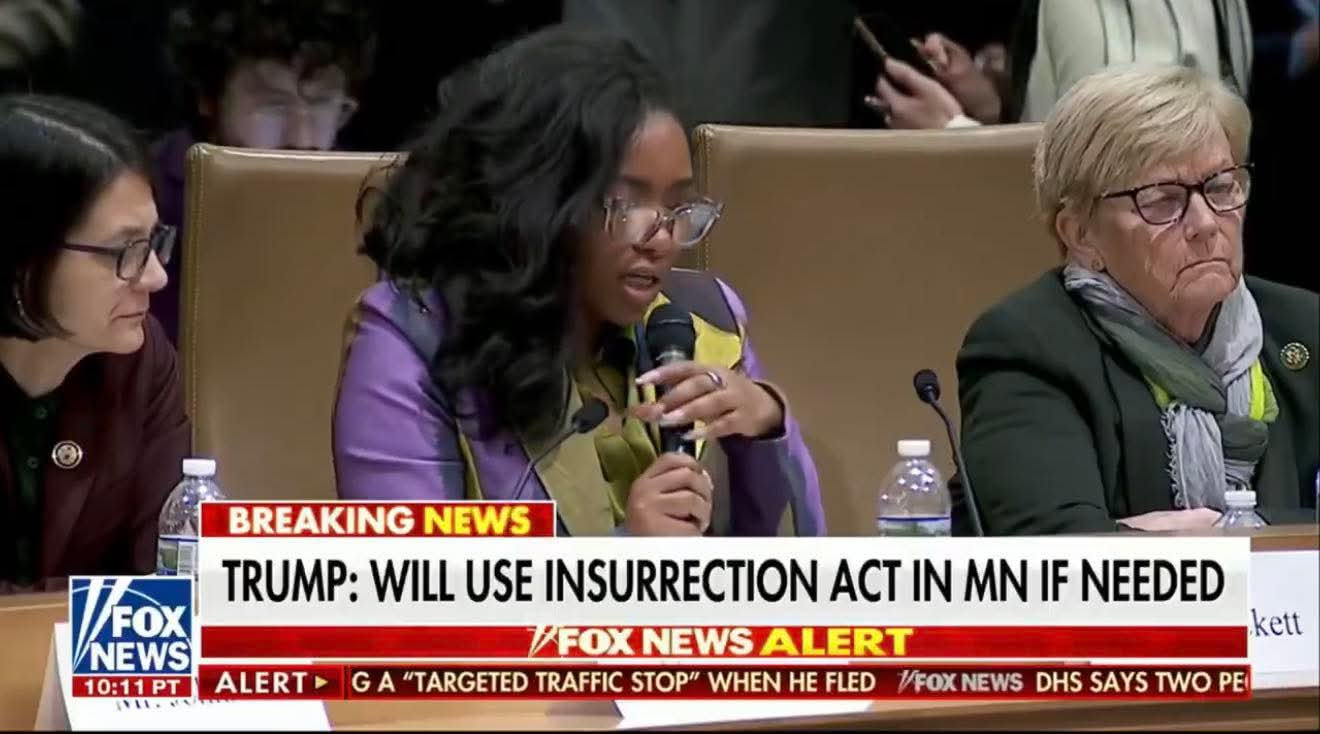
JUST IN…Congresswoman’s ‘Slave Patrol’ Comment Sends Shockwaves Through DC — Resignation Calls Explode”
What does she said and 😡 Why Critics Are Furious…Watch details 👇 👇
Congresswoman’s ‘Slave Patrol’ Comment Sends Shockwaves Through DC — Resignation Calls Explode
In a political firestorm gripping Washington this fall, Democratic Congresswoman Jasmine Crockett ignited intense controversy after publicly comparing Immigration and Customs Enforcement (ICE) to “slave patrols” — an analogy referencing armed groups that enforced slavery in the antebellum South. Her remarks have reverberated through Capitol Hill, triggering fierce criticism from Republicans, sparking social-media outrage, and prompting calls from some conservative voices for her resignation or even expulsion from Congress.
🔥 What She Actually Said
During multiple high-profile appearances — including on MSNBC’s Velshi — Rep. Crockett argued that modern federal immigration enforcement tactics resemble the old slave patrols, asserting that current policies and practices of agencies like ICE lack accountability and target vulnerable communities in ways she described as rooted in historical injustice. She emphasized that when people understand the history of policing in the U.S. and its links to slave patrols, they could see parallels in how ICE operates today.
Crockett said: “As somebody who understands history, when I see ICE, I see slave patrols… if you know the history of policing in this country, then you understand that they were born out of slave patrols.”
She also critiqued recent Supreme Court decisions expanding federal enforcement powers and cited them as evidence that racial profiling and unchecked authority are returning in new forms.
😡 Why Critics Are Furious
Crockett’s comments immediately drew condemnation from many Republican lawmakers and conservative media outlets, who argue that comparing federal law enforcement to slave-era enforcers is incendiary, demeaning to ICE personnel, and undermines respect for the rule of law. One prominent criticism circulated online claims her rhetoric “dehumanizes law enforcement” and encourages hostility toward federal agents, fuelling division rather than dialogue.
Former President Donald Trump publicly said Crockett had “gone over the line” with her remarks, amplifying GOP calls for punitive action against her.
Online commentators also seized on the issue to argue that her analogies were not only offensive but dangerous — with some conservatives asserting they amount to incitement or should disqualify her from serving, though no formal expulsion effort has succeeded in Congress.
🧠 Supporters Push Back
While controversy mounted, Crockett’s defenders — particularly on the progressive left — argued that historical context matters, noting that scholars and civil rights leaders have long discussed the role of slave patrols in shaping American policing. Supporters say her remarks were intended to highlight systemic issues in law enforcement and the legacy of racial injustice, not to incite violence.
Progressive activists also point out that Crockett’s larger focus was on structural reform, not law enforcement personnel individually, and that invoking history should spark conversation rather than condemnation.
🏛️ Broader Political Fallout
The controversy coincides with heightened tensions over immigration enforcement, including aggressive ICE operations in major cities and ongoing debates in Congress over border security, human rights, and federal authority. Crockett’s framing has fueled broader discussion about how police and federal agencies are portrayed in public debate — and where the line lies between historical critique and inflammatory rhetoric.
While calls for Crockett’s resignation have proliferated among conservative commentators and some Republican officials, there is no indication she plans to step down, and Democratic leadership has largely refrained from joining in those calls. Instead, many Democrats emphasize the need for civil discourse and substantive policy discussion on immigration and policing — even as tensions remain high across the political spectrum.
📌 What This Reveals
The episode underscores the deep polarisation in U.S. politics, where historical analogies are no longer academic but provoke immediate political mobilization. Crockett’s “slave patrol” comment has become more than a soundbite — it’s a flashpoint in the ongoing struggle over how America confronts race, policing, and national identity in the 21st century.

INTERNET SHATTERED: OBAMA write write me an article BREAKS RECORDS DECLARING TRUMP BIGGEST THREAT TO AMERICA — 30 MILLION VIEWS IN 1 HOUR Ignites Epic Backlash Storm! Barack Obama dropped a bombshell interview—naming Donald Trump the ultimate threat over Islamophobia or jihadist violence, sending shockwaves through Washington and leaving MAGA stunned. Trump’s allies reportedly erupted in furious denials, scrambling to counter while Obama stood unyielding; backlash hit like lightning as critics hailed the call-out, but fans can’t believe this unfiltered declaration just exposed the overlooked detail—leaked interview snippets hinting at deeper Obama revelations still coming. Clips of the viral moment exploded online, going viral by the minute, trending across platforms as outrage spirals. The internet can’t stop talking about this presidential showdown—watch the bombshell below 👇 👇
POLITICAL EARTHQUAKE: T.r.u.m.p Faces Firestorm After Former General’s Explosive Accusation! ⚡ A stunning public claim by a former U.S. general has ignited outrage in Washington, triggering fierce reactions from lawmakers and voters alike. Trump is now on the defensive as the fallout escalates. 🔥 What was said, why it matters, and how this could reshape the battle ahead 👇 Full details below

💥 GOP LINE IN THE SAND: REPUBLICANS TURN ON T.R.U.M.P OVER GREENLAND — Warnings of IMPEACHMENT Erupt as Invasion Talk Triggers Open Revolt Inside the Party! ⚡ In a shocking turn that flipped blind loyalty on its head, congressional Republicans are finally breaking ranks—drawing a hard line over T.r.u.m.p’s Greenland rhetoric and the specter of marching Marines into a NATO ally. What started as MAGA muscle-flexing quickly unraveled as senators and House members went on record with blunt warnings. Rand Paul slammed saber-rattling as counterproductive, Mitch McConnell invoked decades of Arctic alliances to warn of strategic self-harm, and Rep. Don Bacon went nuclear—calling the talk “utter buffoonery” and openly floating impeachment if threats became action. Insiders say the backlash is real this time, not camera posturing. With razor-thin margins in the House and swing-district Republicans furious, whispers are growing that Greenland could be the final straw—one move too far that fractures the party and ends a presidency. The internet is exploding, clips are trending everywhere, and the fallout is spreading fast. The full breakdown is going viral—watch before it’s buried and see why even loyal Republicans are saying “not this time”… Watch full below 👇

BREAKING…NOBEL BACKLASH BOMBSHELL: NOBEL COMMITTEE STRIKES BACK AT T̄R̄UMP for MEDAL STEALING — Global Fury Ignites White House Panic, Cover-Ups Whispered as Scandal Escalates to Breaking Point! what started as a glittering awards buzz detonated into international chaos when the Nobel Committee fired off a scathing response to President T̄R̄UMP, hinting at audacious misconduct tied to a coveted prize that has diplomats reeling. T̄R̄UMP’s team reportedly scrambled in denial frenzy, branding it “baseless attacks,” while the committee’s statement sent shockwaves through elite circles—insiders claim leaked cables expose frantic efforts to downplay the incident, fueling whispers of hidden motives. The full footage is going viral see why the Internet can’t stop talking about this prize-stealing scandal that’s spreading worldwide…

BREAKING…Donald Trump threatens MORE tariffs on countries who oppose Greenland takeover,also stated two more reasons for his actions which keeps the Internet buzzing…Read more

JUST IN…Congresswoman’s ‘Slave Patrol’ Comment Sends Shockwaves Through DC — Resignation Calls Explode” What does she said and 😡 Why Critics Are Furious…Watch details 👇 👇

BREAKING….CAPITOL MELTDOWN ERUPTS: Kristi Noem’s Impeachment Rockets Forward at Lightning Speed — Allies Freeze in Shock, Rivals Break Into Celebration as Washington Loses Control! 🔥 See the viral clips setting the internet on fire right now…

SHOCKING: 5000 SOLDIERS SURRENDER THEIR GUNS and QUIT ARMY TONIGHT — Whispers of Mutiny Spread as Loyalty Crumbles and Command Faces Unprecedented Crisis ⚡ In a shocking turn that has military circles reeling, what started as routine duty exploded into an unthinkable scene overnight. Chaos erupted when reports surfaced of thousands laying down arms in a dramatic walkaway, leaving bases stunned and questions flying. and fueling fears of wider unrest. The full footage is going viral—watch and see why the internet can’t stop talking about this jaw-dropping breakdown…👇

SHOCKING UPDATE…: GREENLAND EXILES TRUMP FOREVER — Global Rebellion Ignites as Arctic Ban Humiliates Washington in Epic Sovereignty Showdown! 🚨 In a shocking turn that detonated across the Arctic, Greenland’s parliament slammed the door on Donald Trump forever—passing an unprecedented permanent ban that left the White House in stunned, chaotic silence. Trump’s team reportedly erupted in frantic rage, scrambling to overturn the humiliation while Greenland stood ice-cold and defiant; backlash exploded as allies recoiled in disbelief, but fans can’t believe this unfiltered exile just exposed the overlooked detail—secret leaked cables hinting at desperate U.S. pleas, signaling a much bigger diplomatic war still brewing. Clips of the ban announcement exploded online, going viral by the minute, trending across platforms as the storm intensifies. The internet can’t stop talking about this global rebellion—watch before the next sovereignty strike drops!

💥“TRAITOR” ALERT: Four-Star General Explodes Over Trump’s Military Abuse ⚡ A retired four-star general has delivered one of the sharpest warnings yet about Donald Trump—and it’s coming straight from the military, not partisan politics. These are leaders who spent their careers defending the Constitution, and they say Trump is crossing a dangerous line. General Barry McCaffrey blasted Trump for turning speeches to troops into partisan rallies—conduct that would get any officer fired or court-martialed. He warned that Trump treats service members as political props, talks openly about using U.S. cities as military training grounds, and attacks lawmakers who remind troops they must refuse illegal orders. That’s not leadership. That’s authoritarianism. Full story
💥Kennedy Center President Richard Grenell is sounding the alarm, accusing what he calls the “legacy media” of actively fueling a growing backlash against the nation’s premier cultural institution. According to Grenell, major news outlets have gone beyond reporting the controversy and are instead encouraging artists to boycott the venue after its highly contentious rebranding as the Trump–Kennedy Center.🇺🇸 👉Read on to discover what sparked this threat, why the media is pushing back so fiercely against the nation’s leading cultural institution, and how this battle could permanently reshape the future of artistic freedom at one of America’s most iconic organizations. Full story
