
NEWS
JUST IN…TRUMP STUNNED as ALLIES PULL THE PLUG — Canada DROPS Starlink, Europe GOES INDEPENDENT💥 In a blistering public snub that left the White House reeling, former President Trump’s push for Starlink dominance hit a wall as key allies bailed out. Canada abruptly severed ties with the satellite network, while European leaders signaled a pivot to independent systems, framing it as a stand against overreach. Read more: What Trump once touted as a masterstroke in global connectivity now looks like a humiliating flop, exposing cracks in his influence and sparking whispers of bipartisan pushback at home. The symbolic defeat stings, tarnishing his image as the ultimate dealmaker amid growing institutional resistance. Critics wasted no time piling on, with Democrats hailing the moves as a wake-up call against tech entanglement, while even some GOP voices murmured unease. Analysts interpret this as a bold message from allies: no more bending to American whims. Warnings swirl that the setback could erode Trump’s broader leverage on the world stage, turning a calculated power play into a narrative-shifting backfire that leaves his ambitions hanging in the balance. What was once marketed as a bold vision for global connectivity has suddenly turned into an international embarrassment.

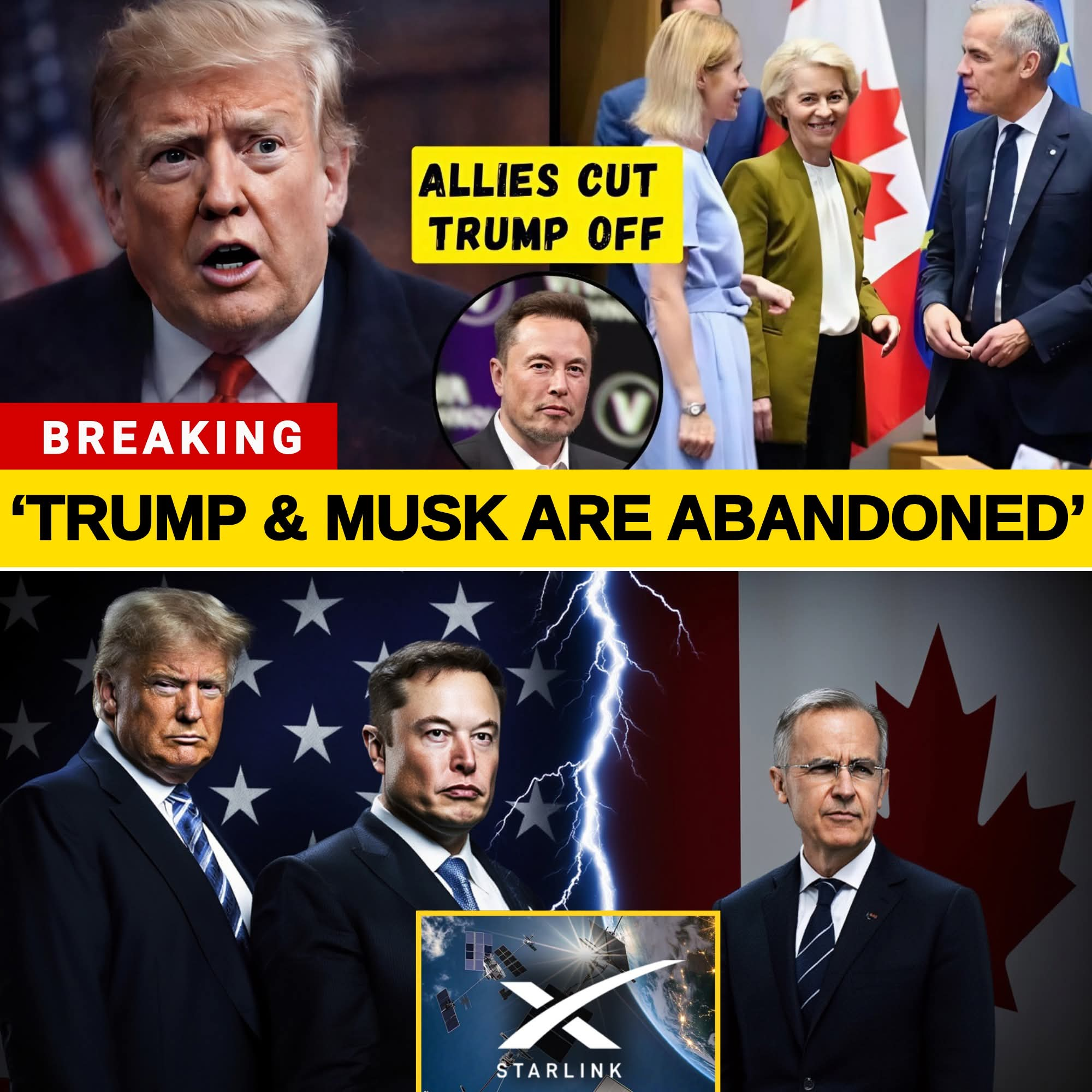
JUST IN…TRUMP STUNNED as ALLIES PULL THE PLUG — Canada DROPS Starlink, Europe GOES INDEPENDENT💥
In a blistering public snub that left the White House reeling, former President Trump’s push for Starlink dominance hit a wall as key allies bailed out. Canada abruptly severed ties with the satellite network, while European leaders signaled a pivot to independent systems, framing it as a stand against overreach.
Read more:
What Trump once touted as a masterstroke in global connectivity now looks like a humiliating flop, exposing cracks in his influence and sparking whispers of bipartisan pushback at home. The symbolic defeat stings, tarnishing his image as the ultimate dealmaker amid growing institutional resistance.
Critics wasted no time piling on, with Democrats hailing the moves as a wake-up call against tech entanglement, while even some GOP voices murmured unease. Analysts interpret this as a bold message from allies: no more bending to American whims. Warnings swirl that the setback could erode Trump’s broader leverage on the world stage, turning a calculated power play into a narrative-shifting backfire that leaves his ambitions hanging in the balance.
What was once marketed as a bold vision for global connectivity has suddenly turned into an international embarrassment.
In a stunning diplomatic and technological rebuke, key U.S. allies have begun backing away from Starlink — the satellite network championed under Donald Trump’s era as a symbol of American dominance in space-based communications. Canada has now moved to sever reliance on the system, while European leaders are accelerating plans for their own independent satellite infrastructure. The message is unmistakable: the world is no longer willing to tether its critical communications to American political turbulence.
Behind closed doors, officials describe the shift as a matter of sovereignty and security. But publicly, the decision lands as a sharp slap to Trump’s legacy branding of Starlink as an unbeatable global utility. What was once pitched as a masterstroke of technological diplomacy now looks like a cautionary tale of overreach.
Canada’s decision to step away from Starlink contracts sent immediate shockwaves through Washington policy circles. European counterparts followed with announcements of expanded funding for homegrown satellite constellations, framing independence as essential for strategic autonomy. One senior EU official summarized the mood bluntly: “No nation should have its infrastructure hostage to another nation’s politics.”
The timing could not be worse for Trump, who has repeatedly touted technological dominance as proof of American strength under his leadership. Instead, allies appear to be voting with their budgets — and their trust — choosing diversification over dependence.
Critics wasted no time framing the development as symbolic. Democrats hailed the shift as a wake-up call about the dangers of intertwining national infrastructure with private tech empires. Even within Republican circles, murmurs of discomfort surfaced, with some strategists warning that allies breaking away could weaken America’s influence in future negotiations.
Analysts say the damage goes beyond satellites. When allies openly build alternatives to American systems, it signals a deeper recalibration of power relationships. Trust, once assumed, must now be earned. And in global politics, lost trust is rarely

JUST IN…TRUMP STUNNED as ALLIES PULL THE PLUG — Canada DROPS Starlink, Europe GOES INDEPENDENT💥 In a blistering public snub that left the White House reeling, former President Trump’s push for Starlink dominance hit a wall as key allies bailed out. Canada abruptly severed ties with the satellite network, while European leaders signaled a pivot to independent systems, framing it as a stand against overreach. Read more: What Trump once touted as a masterstroke in global connectivity now looks like a humiliating flop, exposing cracks in his influence and sparking whispers of bipartisan pushback at home. The symbolic defeat stings, tarnishing his image as the ultimate dealmaker amid growing institutional resistance. Critics wasted no time piling on, with Democrats hailing the moves as a wake-up call against tech entanglement, while even some GOP voices murmured unease. Analysts interpret this as a bold message from allies: no more bending to American whims. Warnings swirl that the setback could erode Trump’s broader leverage on the world stage, turning a calculated power play into a narrative-shifting backfire that leaves his ambitions hanging in the balance. What was once marketed as a bold vision for global connectivity has suddenly turned into an international embarrassment.

BREAKING NEWS: TRUMP OPENLY THREATENS Canada Over Ports — but Carney FLIPS THE SCRIPT, Leaving Him HUMILIATED on the World Stage! 🇨🇦🇺🇸 In a jaw-dropping diplomatic showdown that left the entire room in stunned silence, Donald TRUMP abruptly pressured Canada over access to strategic ports — only to be swiftly shut down and embarrassed by Prime Minister Mark Carney in front of global leaders. TRUMP demanded expanded U.S. control over Canada’s critical shipping routes, claiming Washington had been “taken advantage of for decades.” But Carney didn’t hesitate. With a calm yet razor-sharp tone, he made it crystal clear shutdown Trump with just a sentence. Witnesses say TRUMP fell completely silent as Carney delivered his cutting rebuttal, flipping the balance of power in just a few sentences. Several European leaders reportedly nodded in approval, while Asian delegates whispered that they had just witnessed a rare masterclass in high-stakes diplomacy. The confrontation left Washington rattled and off balance — but the most shocking moment was still to come… What Carney said next made the entire room erupt — see the line that left TRUMP completely speechless!👇‼️

TRUMP LOSES IT as Canada Cuts Off the U.S. — EU & Asia Lock In a MASSIVE Aluminum Deal!🔥 In a stunning economic shock that caught Washington completely off guard, Canada has slashed major aluminum shipments to the United States and rerouted them to Europe and Asia — igniting panic inside the White House and sending Donald Trump into a rage. According to sources, Ottawa quietly finalized a multi-billion-dollar aluminum partnership with the EU and key Asian economies, instantly replacing U.S. demand and leaving American manufacturers scrambling for supply. Auto plants, aerospace companies, and construction giants across the U.S. are already sounding the alarm over production delays, soaring costs, and potential layoffs. TRUMP reportedly “lost his temper” after discovering Canada had sealed the deal without even informing Washington. Advisors say he slammed the table and accused Canada of “economic betrayal” — but the reality is blunt: Canada found bigger, more stable buyers, and moved on. For the first time in decades, the U.S. is watching Canada’s resource power pivot eastward, while European and Asian partners celebrate what one diplomat called “the strongest trade realignment in years.” Meanwhile, Canada hails a historic win — and the real consequences for America are only just beginning. 👉One U.S. industry is about to collapse first — find out below what Washington never saw coming. 👀👇
BREAKING: Canada slaps down Trump, signals military response if Greenland is invaded. Discover how Canada’s bold move towards the United States regarding Greenland is reshaping global politics – Read more

SHOCKING: CANADA–DENMARK PACT LOCKS THE U.S. OUT OF GREENLAND — TRUMP HAS NO CARDS 🇨🇦 🇩🇰 Canada and Denmark have just finalized a surprise bilateral pact that effectively cuts the United States out of Greenland’s strategic future, leaving Washington stunned. Sources say the agreement tightens control over Arctic access, security coordination, and critical infrastructure, shutting down any room for U.S. maneuvering. Analysts warn this move redraws the Arctic chessboard overnight, stripping Trump of leverage and exposing how isolated the U.S. position has become. Insiders say there was no contingency plan, no counterplay — and no cards left to play. 👇 Why this pact changes everything in the Arctic — and why the U.S. can’t undo it — is now sending shockwaves through global power circles.”

BREAKING…T.r.u.m.p imposes lumber tariffs — Canada strikes back with a $1B plan, catching Washington completely off guard. Instead of backing down, Ottawa ramped up production, expanded sawmill capacity, and redirected lumber exports to Europe and Asia, immediately tightening supply in the U.S. Construction costs in America surged, the housing market wobbled, and Trump’s tariff strategy was effectively neutralized. The country that signed a major lumber deal with Canada right after T.r.u.m.p’s move will shock you — see details

BREAKING: T.R.U.M.P SLAPS POTASH TARIFFS — BUT CANADA EMERGES THE BIG WINNER AS U.S. FARMERS COLLAPSE! A trade disaster is sweeping across the United States after T.r.u.m.p’s potash tariffs completely backfired. Instead of squeezing Canada, the policy is driving American farmers into their worst crisis in years. At an emergency meeting at the U.S. Department of Agriculture, a senior T.r.u.m.p adviser reportedly admitted in despair: Analysts are calling this “T.r.u.m.p’s worst trade failure of the year” — a political pressure tactic that turned into a disaster for the very people he claimed to protect. But what Washington fears most is revealed below

BREAKING: Trump SCARED TO DEATH as Special Counsel Hands TREMBLING Evidence! 🔥 💥 In a heart-pounding courtroom showdown that’s leaving the nation breathless, Special Counsel Jack Smith has DELIVERED a mountain of TREMBLING evidence against President Trump — exposing alleged crimes that have him visibly SHAKEN and terrified of what’s coming next! 😱 WOW! ⚡ The bombshell handover includes classified docs, witness testimonies, and irrefutable proof of obstruction and election interference — sending Trump’s legal team into PANIC MODE as the walls close in faster than ever! 🚨 WOW! SHOCKING details of the trembling evidence and Trump’s terrified reaction are even MORE EXPLOSIVE than the headline!
JUST IN…Trump SPEECHLESS As NEW AFFAIR BOMBSHELL Just SHOCKED HIS ALLIES⚡ Donald Trump survived scandals that would have ended any normal political career, and that culture of zero accountability has spread everywhere. Now, former Senator Kyrsten Sinema is at the center of a disturbing lawsuit that shows exactly how power gets abused. Sinema is being sued under North Carolina’s “alienation of affection” law by the ex-wife of her former bodyguard. The lawsuit alleges that while serving as a U.S. senator, Sinema had an affair with her married subordinate, promoted him, gave him lavish trips, financial rewards, and blurred every professional boundary imaginable….More shocking details 👇 👇

BREAKING NEWS….Pentagon ERUPTS as Canada Reopens Fighter Jet Choice — Washington Loses Its Grip 🇨🇦🇺🇸 For decades, Canada’s air force decisions were treated as automatic extensions of U.S. power. But behind closed doors, that assumption just cracked. What started as a routine defense procurement has turned into something far more unsettling for Washington — a signal that Ottawa is no longer willing to outsource control, data, and long-term strategy without question. The anger in the Pentagon isn’t about one aircraft. It’s about what slipping control really means. What truly rattled U.S. defense officials wasn’t cost overruns or delivery delays — it was the possibility that Canada might choose autonomy over dependency. Control over software, Arctic surveillance, NORAD integration, and future upgrades has quietly become the real battlefield. If Canada proves it can defend itself without locking into a single American ecosystem, a precedent is set — and that’s when leverage doesn’t just weaken, it evaporates. 👉 The story is still unfolding… See what happens next
