
NEWS
Trump captures Maduro in daring raid, backs loyalist Delcy Rodríguez as Venezuela’s new leader over opposition star Machado—and warns her: pay a bigger price if you don’t play ball. Is this the end of the regime or US takeover? What happens next?Read more 👇

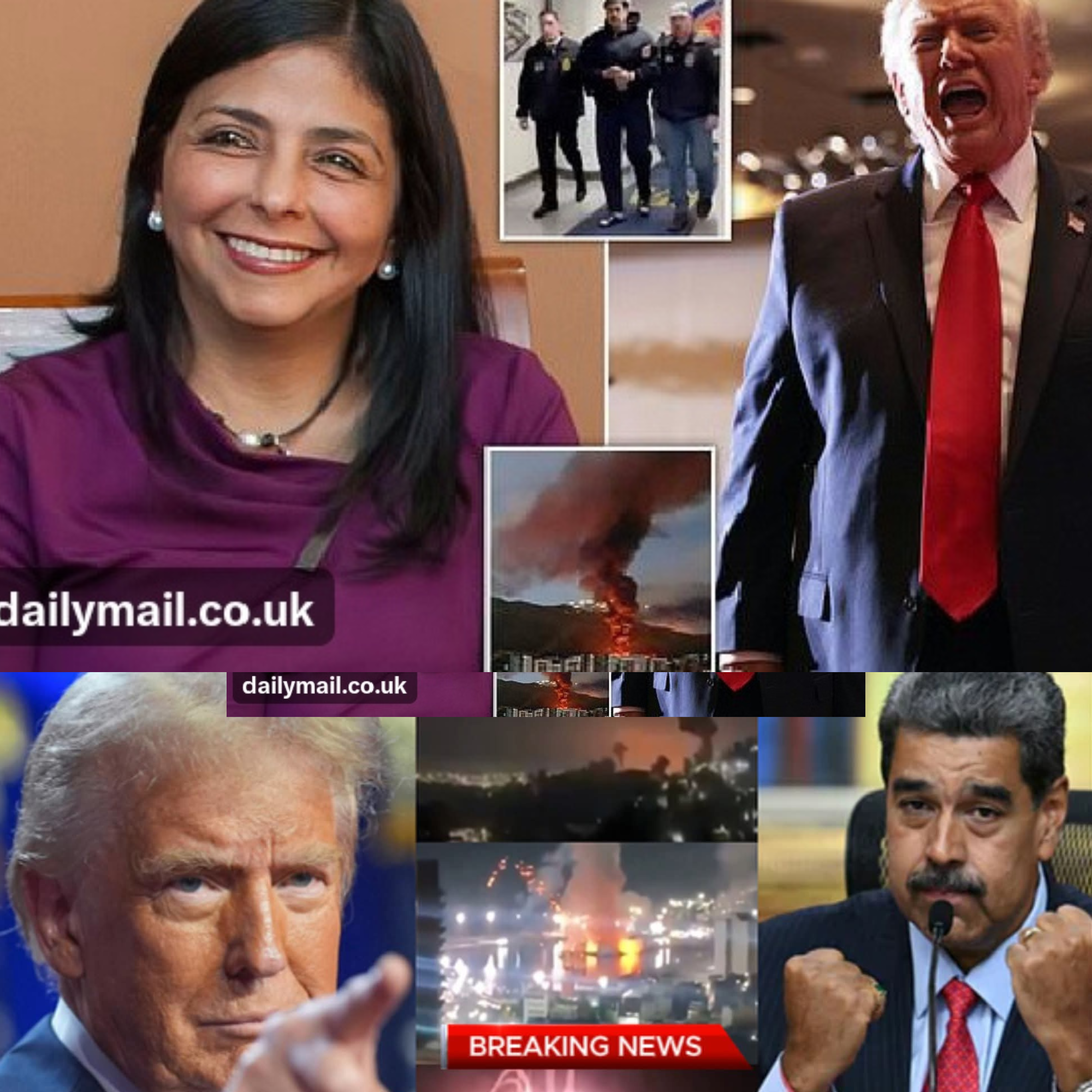
Trump captures Maduro in daring raid, backs loyalist Delcy Rodríguez as Venezuela’s new leader over opposition star Machado—and warns her: pay a bigger price if you don’t play ball. Is this the end of the regime or US takeover? What happens next?Read more 👇
A Shock to the System: Trump, Maduro, and a Hypothetical U.S. Power Play in Venezuela
This article is a fictional scenario exploring possible consequences of an imagined geopolitical event.
In a stunning turn of events that would upend Latin American politics, global diplomacy, and U.S. foreign policy norms, former U.S. President Donald Trump is imagined to have overseen the capture of Venezuelan strongman Nicolás Maduro in a covert raid—then thrown Washington’s backing behind Delcy Rodríguez, a longtime regime insider, as Venezuela’s new leader. The move reportedly sidelines opposition figure María Corina Machado and comes with a blunt warning to Rodríguez: cooperate, or “pay a much bigger price.”
If such a scenario were to unfold, the immediate question would not simply be who rules Venezuela next, but who really holds power—and whether this marks the end of Chavismo or the beginning of something closer to a U.S.-managed state.
The Fall of Maduro: Regime Change Without Revolution?
Maduro’s hypothetical capture would mark the first time a sitting Venezuelan leader was forcibly removed by direct U.S. action. Unlike a popular uprising or negotiated transition, this would be a decapitation strike—fast, external, and deeply controversial.
Supporters might argue that Maduro’s removal ends years of economic collapse, mass migration, and authoritarian rule. Critics, however, would see the act as a violation of sovereignty that undermines international law and sets a dangerous precedent, especially in a region historically scarred by U.S. intervention.
The absence of a domestic revolutionary moment also raises a critical issue: without Venezuelans themselves toppling the regime, has the regime really ended at all?
Why Delcy Rodríguez—and Not the Opposition?
Perhaps the most surprising element of this imagined scenario is Trump’s backing of Delcy Rodríguez, a core figure of the very system Washington spent years sanctioning.
From a purely strategic perspective, the logic is clear:
Rodríguez knows the state machinery.
She has ties to the military and bureaucracy.
She can deliver short-term stability.
Backing María Corina Machado, while symbolically democratic, would likely provoke backlash from entrenched power structures and risk chaos. Choosing Rodríguez suggests a “controlled transition” rather than a clean break—continuity over reform.
But this choice would deeply alienate Venezuela’s opposition and millions in the diaspora who see regime insiders as part of the problem, not the solution.
“Play Ball or Pay the Price”: Leverage Over Legitimacy
The reported warning to Rodríguez underscores the nature of this arrangement: power backed by pressure.
In this scenario, Venezuela’s new leader would govern under constant U.S. leverage—sanctions relief on one hand, renewed economic or political punishment on the other. That dynamic would raise uncomfortable questions:
Is Rodríguez a president, or a proxy?
Are reforms genuine, or transactional?
Who decides Venezuela’s future: Caracas or Washington?
Rather than restoring sovereignty, the move could si

BREAKING: Pam Bondi PANICS as Judge EXPOSES Evidence Tampering LIVE — Trump Dragged Into the Fallout ▶️ Watch the full moment: Pam Bondi appeared visibly shaken as a judge confronted her over serious inconsistencies in how key evidence was handled — in real time, on the record. The exchange stunned the room. The judge pressed hard. Bondi struggled to respond. And within minutes, the fallout expanded straight to Donald Trump, as his name was pulled into the dispute during the hearing. Legal observers immediately flagged the moment as explosive, with clips spreading fast and questions mounting about who knew what — and when. This wasn’t a leak. This wasn’t a rumor. This happened LIVE….More Bombshell below ⬇️ ⬇️
🚨 JUST IN: Trump EMBARRASSES HIMSELF After Carney SHUTS DOWN AVIATION THREAT — Washington LEFT SCRAMBLING! ✈️💥🇨🇦🇺🇸 What was supposed to be a hardline aviation threat has collapsed into a public embarrassment after Mark Carney calmly shut it down, exposing just how hollow Washington’s leverage really is. As Trump escalated his rhetoric, Canada responded with facts, regulations, and contingency plans that neutralized the threat almost instantly, leaving U.S. officials visibly off balance. Insiders say the White House was caught off guard as Carney’s response flipped the script — turning a pressure tactic into a self-inflicted misstep. Instead of forcing concessions, Trump’s move has now highlighted America’s dependence on Canadian aviation routes and cooperation. 👉 The aviation detail Carney revealed — and why it made Trump’s threat collapse on the spot — is now spreading fast. 👇👇 Click the full story link in the comments before the fallout deepens.

BREAKING: Senate Republicans Just Turned on Trump — What They Agreed to in Private Is STUNNING ⚡ Something snapped inside the Republican Party this morning. After explosive audio surfaced revealing Trump’s demand for absolute control, Senate Republicans quietly gathered behind closed doors — and made a decision no one expected. No cameras. No speeches. Just a calculated move that signals open defiance. Within hours, alliances shifted, donors pulled back, and bipartisan talks began to limit Trump’s power. What happened in that private meeting may have just changed the future of the GOP — and Trump’s grip on Washington — forever….See More

BREAKING: Panic Spreads in Republican Circles as Jack Smith Reveals Names of Alleged Co-Conspirators – individuals Donald Trump was said to be in direct contact with, people he trusted and relied on, who allegedly played key roles in orchestrating the horror that unfolded at the U.S. Capitol. After years of speculation, the hidden truth is finally coming into the open. Many Americans are reacting with shock and jubilation as the names of Republicans allegedly connected to the Capitol disaster are mentioned publicly, sending shockwaves through Washington. Political chaos has erupted, and the fallout from these revelations is only just beginning…👇👇

DEFIANT FACE-OFF: JACK SMITH LOCKS EYES WITH MAGA REPS, DECLARES ZERO INTIMIDATION FROM TRUMP’S RELENTLESS THREATS — GOP’S AMBUSH TURNS INTO TOTAL CHAOS? Reportedly, the Special Counsel held firm amid a barrage of heated accusations and social media onslaughts tallying in the hundreds, insiders claim, as Republican fireworks fizzled spectacularly—exploding online with viral clips and divided reactions trending across platforms while fans can’t believe the stunning reversals involving key events from that fateful day. The fallout is intensifying with whispers of blame-shifting and narrative flips; Curious to learn about the unfolding situation….see more
JUST IN….Elon Musk exchanged emails with Jeffrey Epstein to plan a trip to Epstein island…Read more Bombshell below ⬇️ ⬇️
BREAKING….Team Canada’s Connor McDavid Shares His Main 2026 Olympics Goal….MORE BOMBSHELL⬇️⬇️

🚨 JUST NOW: TRUMP IMPEACHMENT 3.0 EXPLODES: 212 LAWMAKERS SIGN RESOLUTION — Shocking Twists Ahead as Chaos Erupts & Secrets Threaten to Unravel Everything! 💥 In a shocking turn of events, Donald Trump’s third impeachment has detonated like a Hollywood blockbuster bomb, with 212 lawmakers signing a blistering resolution accusing him of abuse of power and election meddling. What started as hushed Capitol whispers has erupted into a full-scale congressional war, fueled by explosive evidence reportedly linking the president to shadowy backroom deals that could topple his empire. Insiders claim the resolution was rushed after leaked memos from White House aides revealed desperate attempts to quash probes, leaving Trump fuming at Mar-a-Lago and blasting it as a “rigged betrayal” on Truth Social. Fans can’t believe the betrayal as 47 Republicans break ranks, while the public splits in fury—trending across platforms like X and TikTok with memes and heated debates exploding online. The internet can’t stop talking about this viral impeachment thriller—dive into the full resolution before shocking secrets get buried forever…. more Bombshell below ⬇️⬇️
SHOCKING DETAILS….THE TRASH HAS BEEN COLLECTED: Kennedy Center Finally Scrubs the Stain of Trump From Its Walls!🔥 Eighty-seven seconds—that was all it took to wipe out a legacy defined by scandal. The Kennedy Center has finally taken the step millions have been waiting for: removing the Trump name like a stubborn stain. There was no applause, no respect—only the cold sound of chisels ringing out like a final sentence for a man who forever craves attention. As the letters fell, the illusion of power vanished along with them. This isn’t vandalism; it is a necessary purification, allowing America to finally breathe again THE FULL STORY BELOW!👇👇👇
BREAKING: Banks Cut Ties With Trump as Financial Pressure Closes In on His Empire | Buffett Responds! 🔥 In a devastating blow that’s detonating Wall Street RIGHT NOW, major U.S. banks have begun severing all remaining lending relationships with Donald Trump and the Trump Organization — abruptly cutting off credit lines, refusing new loans, and demanding immediate repayment on hundreds of millions in debt! 😱 WOW! ⚡ JPMorgan, Bank of America, Wells Fargo, and Deutsche Bank are all pulling the plug simultaneously, citing skyrocketing legal risk, repeated defaults, and massive exposure to Trump’s collapsing real estate portfolio amid ongoing fraud cases and court-ordered asset freezes! 🚨 WOW! 📉 Warren Buffett has just broken his silence with a brutal one-liner that’s going nuclear: “When the banks run, the house of cards falls.” The Oracle of Omaha then warned investors to prepare for a full meltdown — stating Trump’s empire is now “technically insolvent” and the contagion will spread fast! ☠️ 🌪️ With Mar-a-Lago already under court control and Deutsche Bank reportedly preparing to seize multiple properties, Trump’s financial empire is in freefall — the most humiliating financial collapse of his career happening in real time! 💣 WOW! 🔥 Full story — Buffett’s full devastating statement and the exact banks pulling the trigger are even MORE EXPLOSIVE than the headline!
